The Bar Council of India does not permit advertisement or solicitation by Advocates in any form or manner. By clicking “I Agree”, you acknowledge and confirm that you are seeking information about Grahak Manch and its Advocates in Surat, of your own accord, and that there has been no advertisement, personal communication, solicitation, invitation or inducement of any sort from the Advocates or the firm to create an Advocate–client relationship.
The content of this website is provided for general public awareness and information only. It is not legal advice, and it should not be relied upon as a substitute for advice on the facts of a particular matter. No Advocate–client relationship is created by accessing this website. The Advocates are not liable for any consequence of any action taken on the basis of the information provided here.
District · State · National CommissionsMediclaim & health insuranceMotor · Fire · Life insuranceBanking & buildersEnglish · ગુજરાતી · हिन्दीજાણો, સમજો, જાગૃત બનો
Orders of the Surat Consumer Commissions and the State and National Commissions, and consumer-law columns by our advocates, as published in Gujarati, Hindi and English in Divya Bhaskar, Sandesh, Dhabkar, Rajasthan Patrika, Dainik Bhaskar and The Times of India. Each article is shown as published, with a plain-English summary of what the Commission held, and the amount and time limits involved.
Looking for something specific? Type what happened, for example insurance claim rejected, builder lift defect, OTP fraud bank, flight refund or shares sold without consent. You can also search in Gujarati or Hindi.
These articles are shown for public education only and are not legal advice. Every case depends on its own facts, and the law may have changed since the date of a report. Please read the article itself for its exact words.
Grahak Manch is a website of Advocates in Surat, Gujarat, practising in consumer protection law, insurance claim disputes, medical negligence, banking and recovery matters, title investigation and legal opinions, real estate disputes and civil matters.
Particulars of the Advocates are provided for the information of those who seek them, in keeping with the Bar Council of India Rules.
Shreyash S. Desai
Advocate
Year of Enrolment
1981
Years of Practice
44 years (in practice since 1981)
State Bar Council
Bar Council of Gujarat
Qualifications
B.Com., LL.B.
Positions Held
Ex. Member, Managing Committee – South Gujarat Chamber of Commerce & Industry (SGCCI), SuratChairman, Consumer Protection Committee – SGCCI, SuratMember, Law Committee – Sarvajanik Education Society, SuratChairman, Administrative Committee – V. T. Choksi Sarvajanik Law College, SuratEx. Chairman, Law Committee – Surat Municipal Corporation
Consumer protection; insurance claims; banking and recovery (empanelled with nationalised, private and co-operative banks); title investigation and legal audit reports; drafting and vetting of legal documents; legal research and opinions; real estate; civil matters
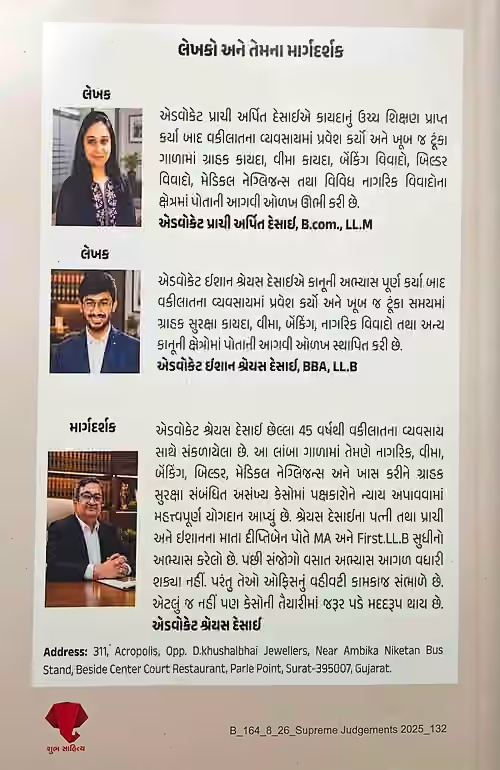
Grahak Manch is a website of Advocates Shreyash S. Desai, Ishan S. Desai and Prachi A. Desai of Surat, Gujarat, experts in consumer protection law.
Areas of Practice
The Advocates practise before the District, State and National Consumer Commissions in the following categories of matters. This list is given for information only.
Insurance claim disputes
Medical (health / mediclaim) insurance
Life insurance
Personal accident insurance
Fire, flood and burglary insurance
Fidelity guarantee insurance
Motor insurance – own-damage claims for cars and trucks
Credit protection insurance policies
Other consumer disputes
Medical negligence
Real estate and builder disputes
Deficiency in banking services
Automobile defects – manufacturing and workmanship defects
Tuition and coaching classes – unfair trade practice and refund of fees
Deficiency in club services
Travel and tour services
Airline services
Postal and courier services
Books · પુસ્તકો
Books written by the Advocates.
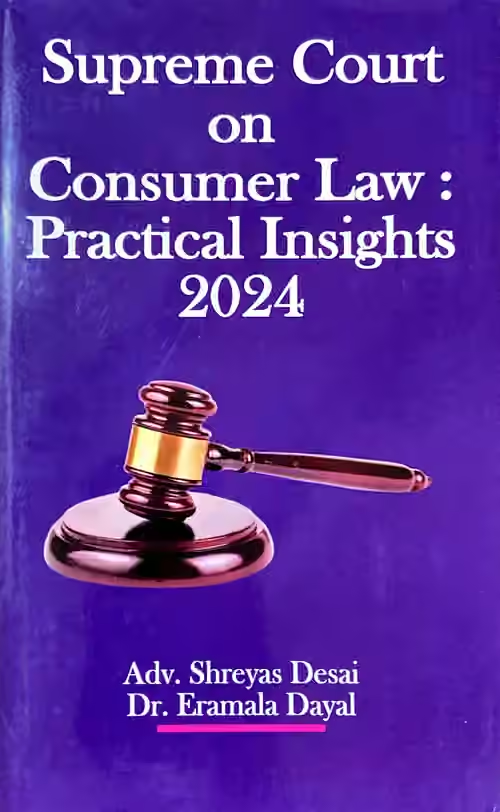
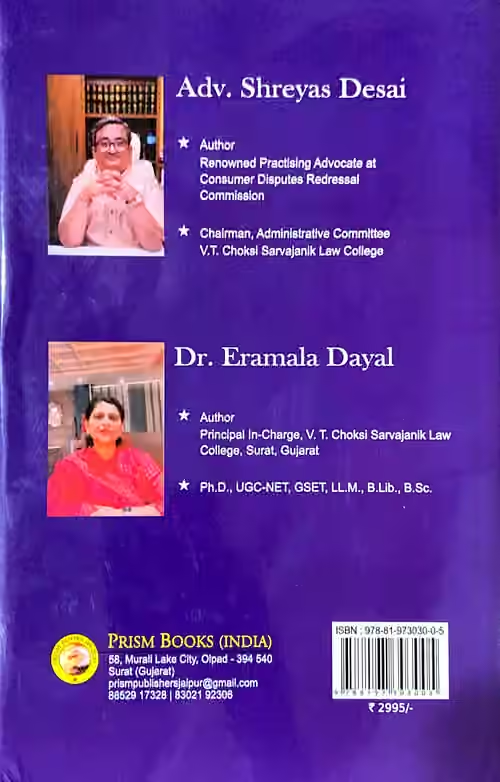
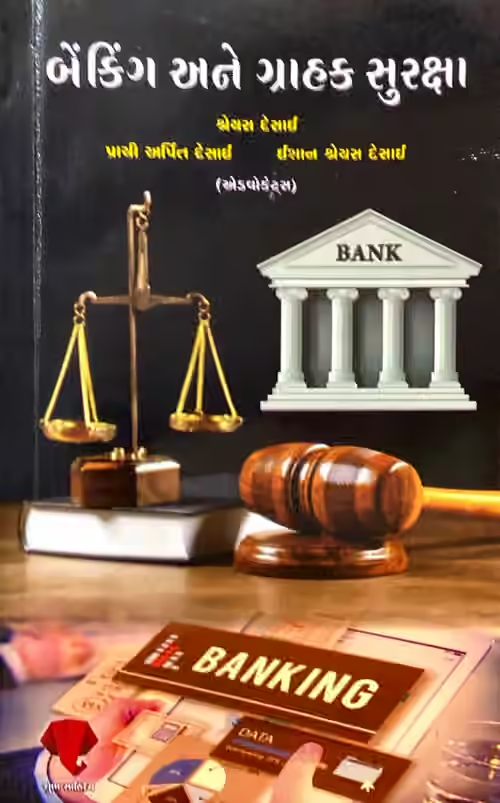
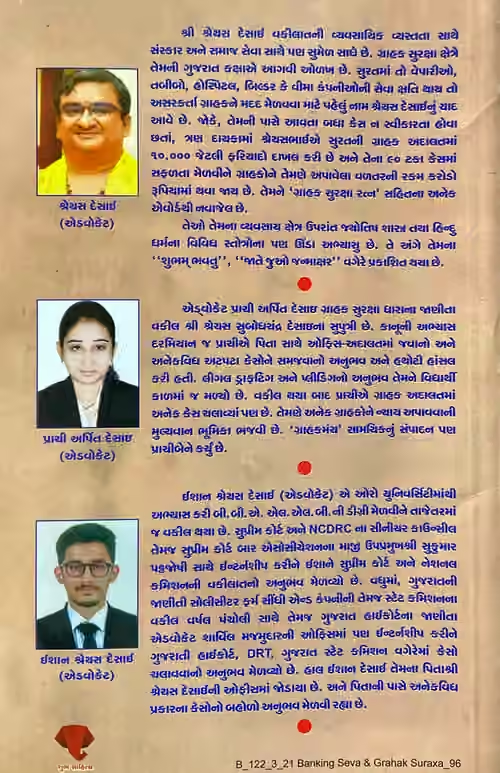
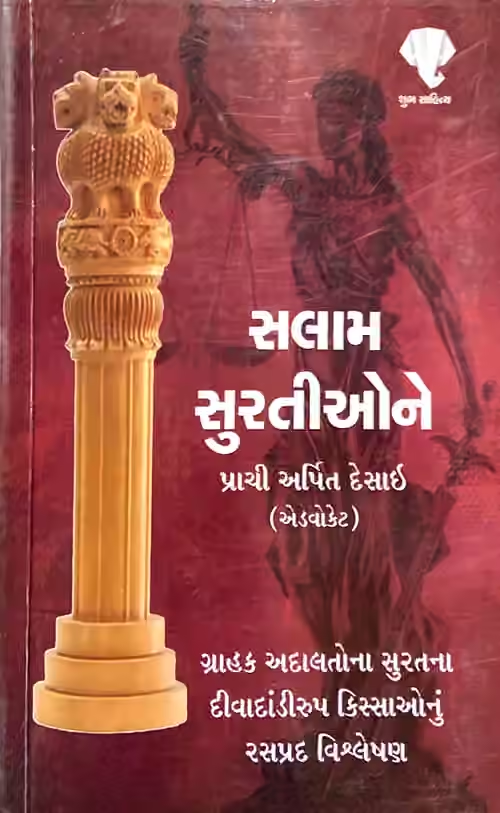
Books on consumer law written by Advocates Shreyash S. Desai, Ishan S. Desai and Prachi A. Desai, in Gujarati and English. Each book is shown with its front and back cover; tap a cover to see it full size.
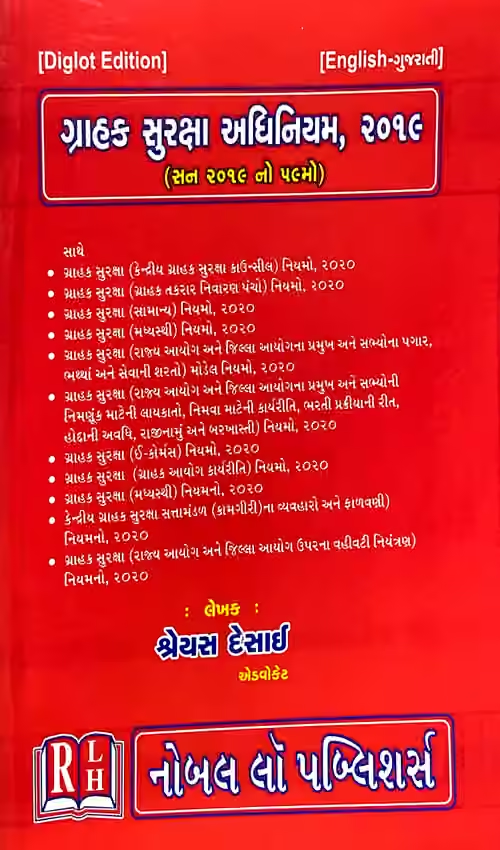
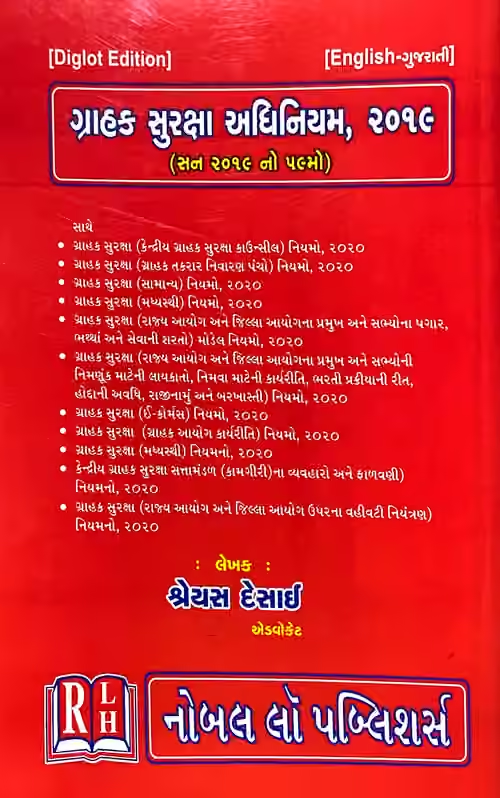
The Consumer Protection Act, 2019 – Diglot Edition (English–Gujarati), with the Rules and Regulations of 2020
The text of the Consumer Protection Act, 2019 in English and Gujarati, with the Consumer Protection Rules and Regulations of 2020, including the E-Commerce Rules and the Mediation Rules.
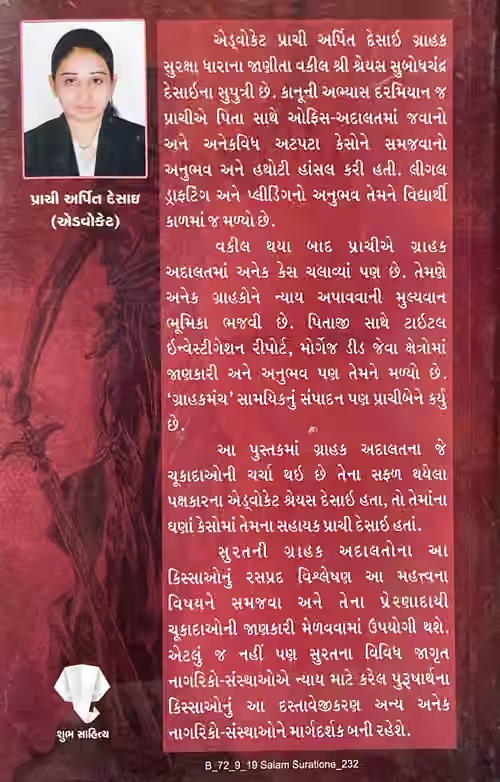
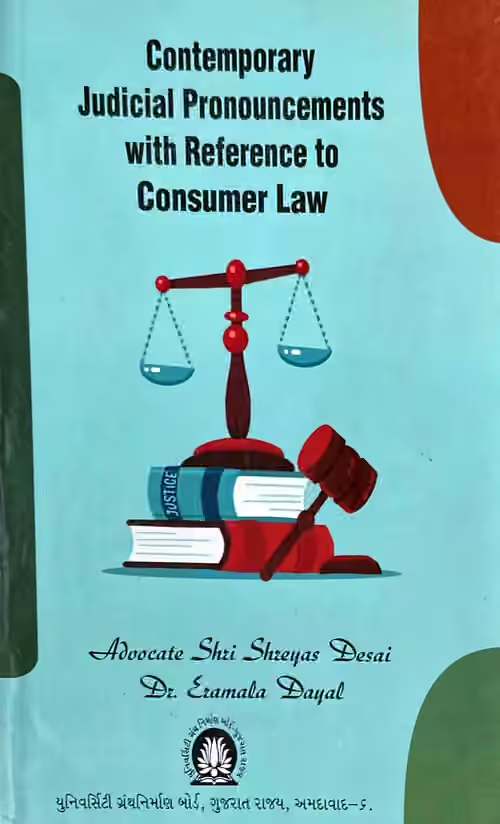
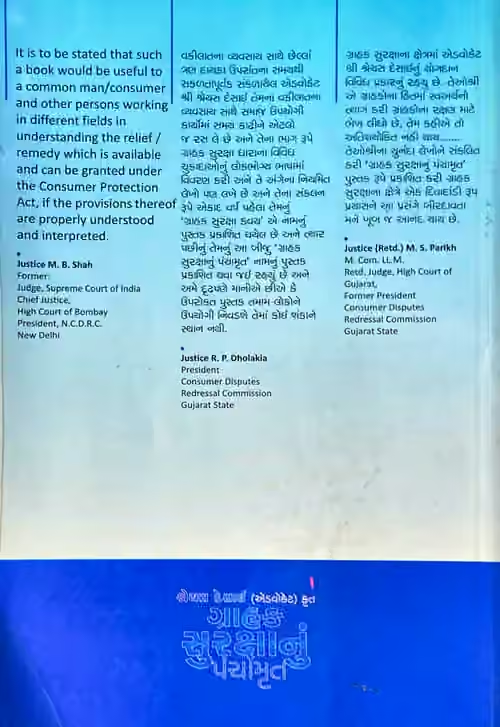
A collection of selected articles on consumer protection judgments, written in plain language. The back cover carries remarks by Justice M. B. Shah, Justice R. P. Dholakia and Justice (Retd.) M. S. Parikh.
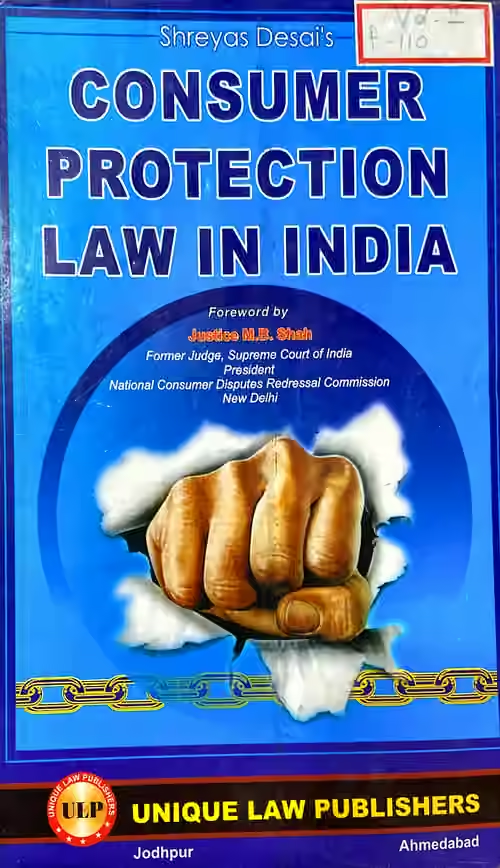
A book on consumer protection law in India, with a foreword by Justice M. B. Shah, Former Judge, Supreme Court of India and President, National Consumer Disputes Redressal Commission.
Grahak Suraksha Kavach (A Shield of Consumer Protection)
Inspiring cases and landmark judgments under the Consumer Protection Act, with the Consumer Protection Act, 1986, the Consumer Protection Rules, 1987, the Gujarat Consumer Protection Rules, 1988 and the Consumer Protection Regulations, 2005 in English and Gujarati.
Consumer law is meant to be used by ordinary people. Know your rights, find the right Commission, and act within time.
Your Rights · ગ્રાહક અધિકારો
01
Right to Safety
Protection against goods, products and services that are hazardous to life and property.
02
Right to Information
To know the quality, quantity, potency, purity, standard and price of goods or services, so that you are not misled by unfair trade practices.
03
Right to Choose
Access, wherever possible, to a variety of goods and services at competitive prices.
04
Right to be Heard
To have your interests given due consideration at the appropriate forums.
05
Right to Seek Redressal
Redressal against unfair trade practices, restrictive trade practices or unscrupulous exploitation.
06
Right to Consumer Awareness
The right to acquire the knowledge and skill to be an informed consumer throughout life.
Grounds of Complaint · ફરિયાદનાં કારણો
When can a consumer complain?
Under the Consumer Protection Act, 2019, a consumer may approach the Consumer Commission in respect of any goods bought or any service hired or availed, where there is a defect in the goods, a deficiency in service, an unfair trade practice or an unfair contract.
Section 2(10)
Defect in goods
A fault or shortcoming in the quality, quantity, purity or standard of the goods bought.
Section 2(11)
Deficiency in service
A fault or shortcoming in the quality or manner in which a service is performed.
Section 2(47)
Unfair trade practice
A false or misleading claim, or a deceptive method, used to sell goods or services.
Section 2(46)
Unfair contract
One-sided terms that significantly reduce the consumer’s rights, such as an excessive security deposit or a disproportionate penalty.
Sectors in which consumer complaints arise 54 sectors+
Advertisements
Agency Services
Agriculture
Airlines
Automobiles
Banking
Broadband & Internet
Coaching & Tuition Classes
Consumer Durables
Contracts
Courier & Cargo
Defective Goods
Deficiency in Service
Digital Payment Modes
Direct Selling
Domestic Fuels
Drugs & Cosmetics
DTH and Cable
E-Commerce
Electrical & Electronic Goods
Electricity
Electronics Products
Finance
FMCG
Food & Beverages
General Insurance
Government Transport
Health Services
Household Goods
Housing
Immigration
Insurance
Legal Metrology
Life Insurance
Masks
Medical
Mutual Funds
NBFCs
Packers and Movers
Petroleum
Postal
Publications
Railways
Real Estate
Retail Outlets
Sanitizer
Seeds
Telecom
Textiles
Tourism
Transport
Unfair Trade Practice
Water
Water Supply
This list is illustrative. Whether a particular matter falls under the Act, and before which Commission, depends on its facts.
Where to Complain · ક્યાં ફરિયાદ કરવી
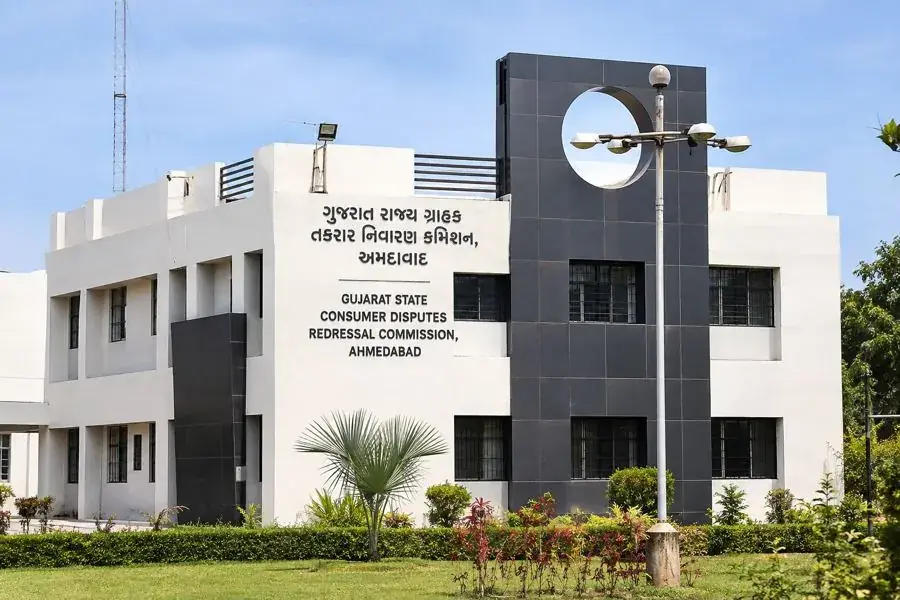
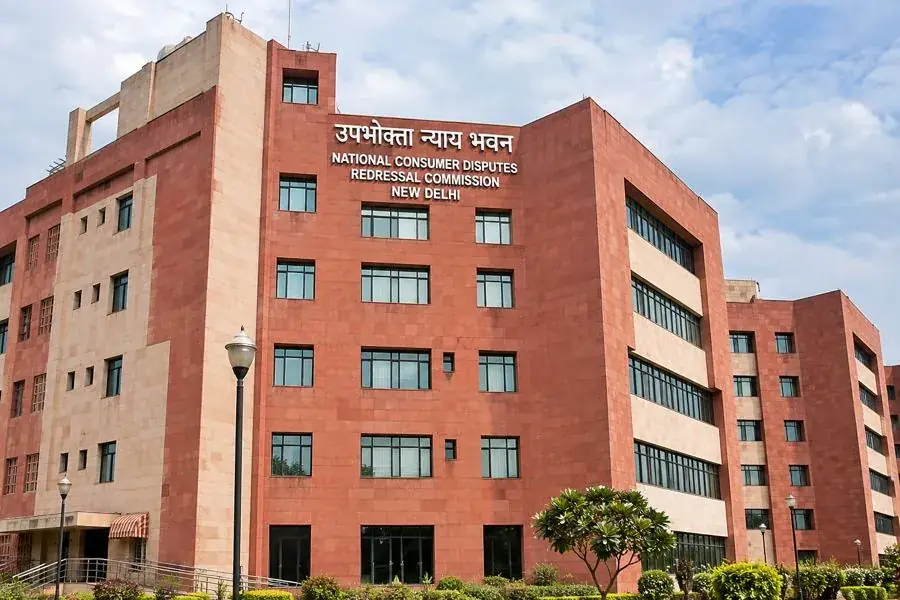
Three tiers, decided by the value paid.
Which Commission hears a complaint depends on the consideration paid for the goods or services, as notified under the Consumer Protection Rules, 2021. A complaint may be filed where the complainant resides or personally works for gain.
Tier 1
District Commission
Up to ₹50 lakh
Located in each district. Appeals from its orders lie to the State Commission, generally within 45 days.
Tier 2
State Commission
Above ₹50 lakh, up to ₹2 crore
Hears original complaints in this range and appeals from District Commissions. Further appeal lies to the National Commission, generally within 30 days.
Tier 3
National Commission
Above ₹2 crore
Sits in New Delhi. Appeals from its orders lie to the Supreme Court, generally within 30 days.
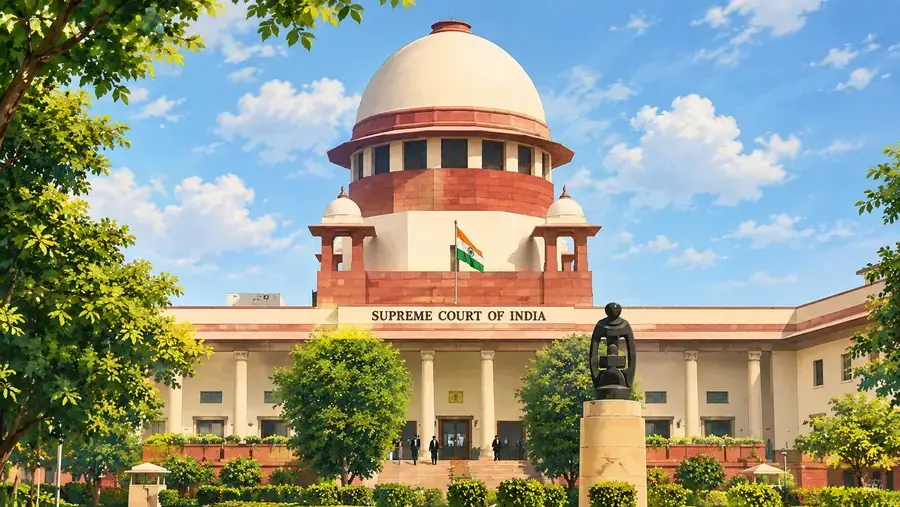
Appeal
Supreme Court of India
Appeals against National Commission orders
Hears appeals against National Commission orders in complaints filed before it. Appeal within 30 days; a party ordered to pay must first deposit 50% of the amount (Section 67).
Which Commission?
Enter the consideration you paid for the goods or services (not the compensation you may wish to claim).
Districtup to ₹50 lakh
State₹50 lakh – ₹2 cr
Nationalabove ₹2 cr
—
Time-limit check
A complaint is ordinarily to be filed within two years from the date the cause of action arose.
—
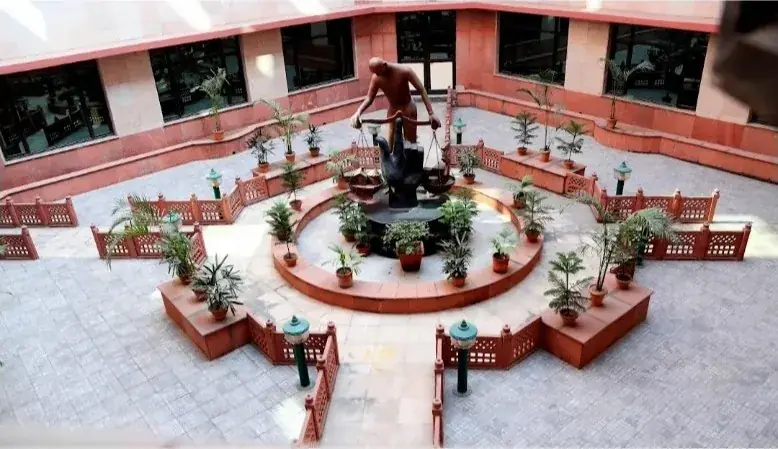
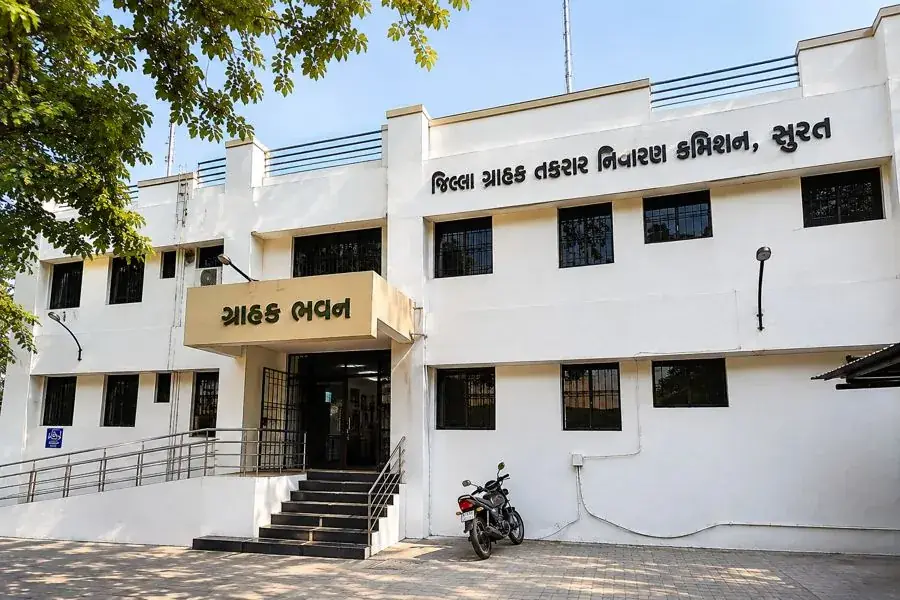
Images of Commission buildings are shown for educational and illustrative purposes only.
These tools give general guidance only. Appeal periods and limitation can depend on the date of the order, the date of knowledge, and whether delay can be condoned for sufficient cause. Please check the current law for your situation.
Updates · હુકમો અને સમાચાર
Recent orders and consumer news.
Short summaries of recent Consumer Commission orders from the official e-Jagriti portal, and consumer news from official websites, refreshed regularly for public information. They are not selected to show the work of any Advocate.
Feed · updated —0 orders0 news items0 published articles
Summaries are for public information only. They are not legal advice and may not capture every point of an order. Please refer to the full order on the official website.
Headlines and summaries belong to the respective source. They are reproduced for public awareness only and are not legal advice.
Awareness Notes · જાગૃતિ લેખ
Short notes on everyday problems.
General information only. Each note is a starting point, not advice on any particular case.
Health InsuranceWhy was my health insurance claim repudiated?4 min+
Common reasons given by insurers include non-disclosure of a pre-existing condition, treatment falling within a waiting period or a listed exclusion, delay in intimating the claim, missing documents, or a view that hospitalisation was not medically necessary.
Read the repudiation letter carefully, ask for the reasons in writing if they are not clear, and compare them with your policy wording and the proposal form you signed. IRDAI’s 2024 health insurance norms reduced the maximum waiting period for pre-existing diseases to three years and limited an insurer’s ability to contest a claim on grounds of non-disclosure after five years of continuous cover, other than for proven fraud. Whether and how this applies depends on your own policy and its dates.
Routes commonly used include the insurer’s grievance cell and the Consumer Commission.
Builders & Time LimitsComplaint against a builder: file within two years2 min+
Under Section 69 of the Consumer Protection Act, 2019, a complaint is ordinarily to be filed within two years from the date the cause of action arose. In an order reported in October 2026, a Surat Commission dismissed a flat buyers’ complaint about a gym and other amenities in a residential project, because it was filed after the two-year period and no application for condonation of delay had been made.
If you have a grievance about a flat or amenities, note the date of possession and the date you first noticed the problem, and do not wait. Whether a particular complaint is within time depends on its facts.
Motor & FireAfter a motor or fire loss: first steps3 min+
Inform the insurer as soon as possible, in writing, and keep proof. Photograph the loss before anything is moved or repaired, unless safety requires otherwise.
An insurer will usually appoint a surveyor. Cooperate, provide the documents asked for, and ask for a copy of the survey report and the basis of the assessed amount. If the claim is rejected or settled for much less than expected, ask for the reasons in writing. Whether a technical lapse justifies rejection depends on the facts and the policy terms.
BasicsDeficiency in service and unfair trade practice3 min+
The Act describes deficiency as any fault, imperfection, shortcoming or inadequacy in the quality, nature or manner of performance of a service that is required to be maintained by law or undertaken under a contract.
An unfair trade practice includes, among other things, a false or misleading representation or advertisement, failing to issue a proper bill or receipt, and refusing to take back defective goods or withdraw deficient services and refund the consideration within the period stated in the bill, or within thirty days where none is stated. A board saying “no refund, no exchange” does not by itself decide the matter.
Time LimitsDeadlines you should not miss2 min+
A consumer complaint is ordinarily to be filed within two years from the date on which the cause of action arose. A Commission may admit a late complaint if it records sufficient cause for the delay, but this should never be assumed.
For appeals, the general periods are 45 days from a District Commission order to the State Commission, and 30 days for appeals from the State Commission to the National Commission and from the National Commission to the Supreme Court. Count from the date of the order, and check the current provisions.
BankingUnauthorised bank or card transactions3 min+
Report immediately to the bank through its official channels, block the card or account, and keep the reference number. RBI’s customer protection framework provides for zero liability where a third-party breach is reported within three working days of receiving the bank’s communication, and limited liability for later reporting, subject to the bank’s policy and the facts.
If the bank does not resolve the complaint, or you are not satisfied with its reply, Consumer Commissions are a route for deficiency in banking services.
Online ShoppingProblems with an online order3 min+
Under the Consumer Protection (E-Commerce) Rules, 2020, e-commerce entities must display seller and product details, and appoint a grievance officer. The officer is to acknowledge a complaint within 48 hours and redress it within one month.
Save screenshots of the listing, order confirmation, payment and chats. If the platform does not respond, the National Consumer Helpline and the Commissions are available. Misleading advertisements and unfair practices can also be brought to the notice of the Central Consumer Protection Authority.
Questions · પ્રશ્નો
Asked most often.
Short answers to the questions consumers in Gujarat ask most about insurance claims and Consumer Commissions.
Where can I complain if my mediclaim is rejected in Gujarat?+
Write first to the insurer’s grievance cell. You may then file a consumer complaint before the District Consumer Disputes Redressal Commission where you live or work, or where the insurer has an office, ordinarily within two years of the rejection. Complaints can be filed online on e-Jagriti.
Can an insurer reject my claim for a pre-existing disease?+
Only if it proves that you knew of the disease and deliberately hid it. Consumer Commissions have repeatedly held that a line of history in a hospital record is not proof by itself; the insurer is expected to produce prior treatment papers and evidence.
Can a TPA cut or reject my mediclaim?+
Under the IRDAI (Third Party Administrators – Health Services) Regulations, 2016, a TPA cannot itself settle or reject a claim; that decision belongs to the insurer. Ask the insurer for its own written decision and reasons.
What is the time limit to file a consumer complaint?+
Ordinarily two years from the date the cause of action arose, under Section 69 of the Consumer Protection Act, 2019. A delay can be condoned if there was sufficient cause.
Which Consumer Commission will hear my complaint?+
It depends on the consideration paid for the goods or service: up to ₹50 lakh before the District Commission, above ₹50 lakh and up to ₹2 crore before the State Commission, and above ₹2 crore before the National Commission.
Do I need an Advocate to file a consumer complaint?+
No. A consumer can file a complaint and appear in person. Many people still take an Advocate’s help with drafting, documents and arguments.
Particulars · ઓફિસની વિગતો
Office of the Advocates.
Address
311, Milestone Acropolis, Near Ambikaniketan Bus Stop, Opp. Khushalbhai Jewellers, Parle Point, Surat, Gujarat – 395 007